In light of this, getting your pool ready for the cold weather is a crucial step towards ensuring that you do not put your investment at risk. Failure to get your pool properly ready could lead to serious problems that would require you to spend more money fixing them when the cold weather arrives.
Preparing Your Pool for Winter
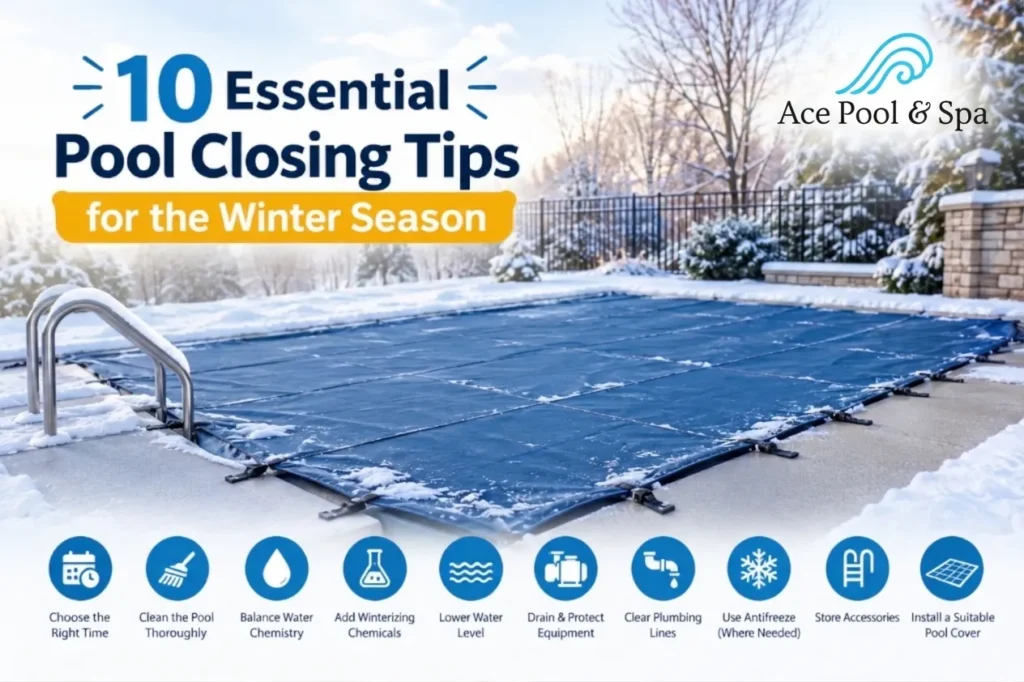
The act of closing down the swimming pool cannot simply be covered up. This involves cleaning, chemical treatment, safeguarding of the plumbing lines, and the preparation of the equipment for many months of inactivity. If you are a homeowner looking for professional Nashville pool closing services, then these vital actions will help you comprehend what should be done to protect your pool for the winter. Do these ten crucial things to prepare your pool for winter.
Follow these ten essential tips to prepare your swimming pool for the winter.
Choose the Right Time to Close Your Pool
The time when the pool needs to be closed in preparation for the winter season is important. If one closes too soon when the temperatures are still warm, algae may grow, and if one takes too long in doing so, the plumbing and other equipment will get frozen.
For areas with cooler weather, some pool owners choose to close their pools when the temperature at night drops close to freezing, or the water gets cooler than 65°F.
Clean the Pool Thoroughly
Begin by getting rid of all the leaves, bugs, grass, and any other organic debris found in the water. Get rid of any dirt that could be present in the water from the winter by skimming, brushing the sides and bottom, and vacuuming the pool.
The organic debris will always be accumulating around the corners and steps of the pool. This could lead to future staining and algae growth in the water. Ensure that the skimmers do not have any baskets in them so that they do not become dirty.
Balance the Water Chemistry
Balancing your water prior to storing it will indeed help in protecting your pool surfaces and equipment during winter. Balancing your water is done by testing your water pH level, total alkalinity, calcium hardness, and sanitizers using a testing kit.
For most pools, the pH level must be between 7.2 and 7.8, while the total alkalinity needs to be at 80-120 ppm. The appropriate level of each factor, however, depends on what you use in your pool.
Balancing your water will greatly lower the chances of corrosion, scaling, and staining in your pool if stored. It will make your future job easier when you have to open the pool.
Add the Appropriate Winterizing Chemicals
After the water has been stabilized, you can consider adding any other appropriate winterizing chemicals as required by your pool and climate. These chemicals could be a shock treatment or a winter algaecide based on the existing sanitizer level of your pool.
Make sure to only use chemicals that are designed for your swimming pool, and use only the required amount. You should never mix chemicals, and make sure that the chemicals are circulated properly before switching off the swimming pool equipment. This will prevent the growth of algae in your pool.
Lower the Water Level Correctly
Certain pools should have the water reduced prior to winter, especially if there is to be a solid covering or freeze protection for the skimmer and pipes. This depends on the construction of the pool, the cover used, and the winterizing procedure itself. Correct winterizing of pools in Nashville considers all of these aspects so that the pool is protected in winter.
Try not to reduce the water level if there is no need for this. Some in-ground pools experience difficulties due to the pressure of the groundwater if the pool water level is excessively low. Follow the pool maker’s instructions and local guidelines on this matter.
Drain and Protect Pool Equipment
Water trapped in pumps, filters, heaters, chlorinators, and other equipment will expand when frozen, causing cracks in internal parts. Winterize the system and drain the equipment as per the recommendations by the equipment manufacturers before winter strikes.
Drain all the equipment that requires draining, especially where there are drain plugs. Drain the filters and heaters as well, following their respective manuals. Do not make the mistake of believing that turning off the pump drains out all the water.
Clear Water From the Plumbing Lines
Freezing should be taken into consideration in regard to the pool plumbing in areas that have low freezing temperatures. Frozen water from the underground suction pipes, return pipes, and skimmer could crack the plumbing or cause expensive damage.
An appropriate air blower or compressor may be utilized for blowing off the plumbing; however, this depends on the pool’s plumbing design and tools at hand. The right amount of pressure and winterization plugs must be employed when dealing with the task. In case it is difficult to winterize your pool plumbing, one might seek professional help.
Use Pool Antifreeze Only Where Appropriate
Pool antifreeze may give further protection to some plumbing systems once the water has been drained from the system. It should never be used as a substitute for draining the lines, nor is it needed on all pools.
If antifreeze is required for the system, then choose the antifreeze which is designed specifically for use with pool plumbing systems. Never use the automotive antifreeze since it may contain substances that should not be used for pool plumbing systems.
Remove and Store Pool Accessories
Ladders, handrails, automatic cleaners, skimmer baskets, solar blankets, and other such accessories should all be removed from the pool prior to covering. Each piece of equipment must be cleaned, allowed to dry, and properly stored.
The equipment must be inspected for any damage that may have occurred prior to storage. Cleaning and drying the equipment will not only save it from wearing unnecessarily during the winter, but will also make it easy for you to get everything ready for the upcoming season.
Install and Secure a Suitable Pool Cover
The correct installation of the cover ensures that there are no leaves, dirt, and other debris on the pool as long as it remains unused. Use a cover that is compatible with the pool, and install it following all guidelines given by the manufacturer. The safety cover has to be installed as per the manufacturer’s directions.
Along with the treatment of chemicals and protection of equipment, cover selection and installation are essential elements. Clean the cover of any excess debris, and dispose of the collected water depending on its design. A normal winter cover should never be used as a child safety device.
Protect Your Pool Before Winter Arrives
Proper closing of the pool will minimize freeze damage, minimize problems during the off-season, and make the opening process easier in the spring. Proper completion of all steps will be more effective than just using a cover since the temperature may go below freezing point.
Whether you winterize the pool yourself or leave it to the professionals at Ace Pool and Spa, the essentials stay the same: thorough cleaning, balanced water, protected plumbing, and proper equipment storage. Completing them before winter begins means fewer surprises and an easier spring opening.